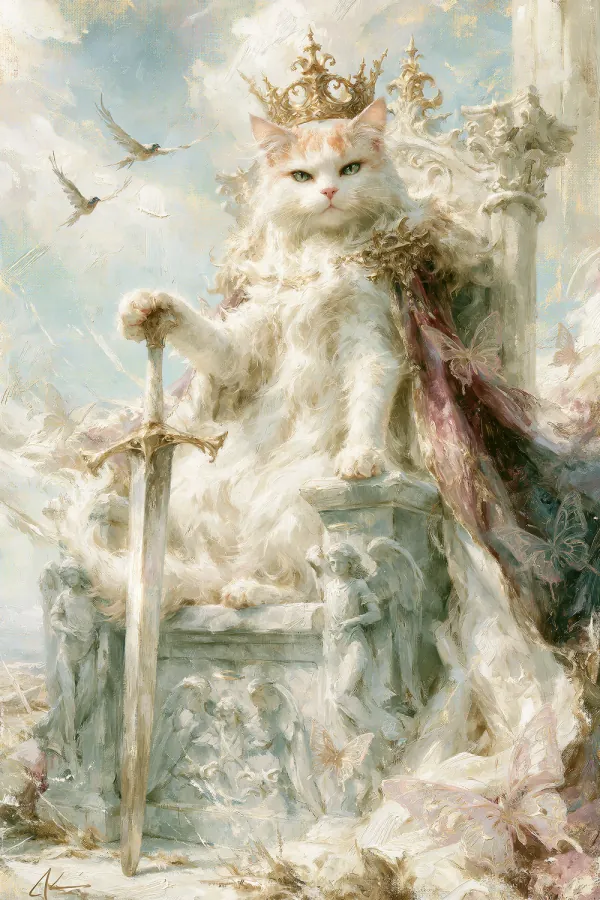
King of Swords
intellectual authority, fairness upright. cold authoritarianism, rigid thinking reversed.
- intellectual authority
- clear judgment
- fairness
- leading with logic
What this card is
The King of Swords sits upright on his throne, sword held perfectly vertical, butterflies carved into the stone behind him matching the Queen's. He represents the suit's mind fully matured into leadership, judgment applied fairly and consistently rather than emotionally. He's authority earned through clear thinking, though the same clarity can curdle into coldness if it stops making room for anyone else's perspective.
King of Swords
- intellectual authority
- clear judgment
- fairness
- leading with logic
- impartiality
The King of Swords means clear logic, fairness, and authority. It shows up when you need to make an objective call, like settling a dispute, handling a contract or official matter, or choosing between options on the merits. Set your feelings aside long enough to look at the facts, get expert advice where you need it, and make a decision you can explain. A wise old cat surveys the whole room before it moves.
A rational, honest relationship. Communicate clearly.
Fair, logical leadership. Make decisions based on the facts.
Logical financial planning. Stick to the facts.
King of Swords reversed
- cold authoritarianism
- manipulation through logic
- using intellect to dominate
- rigid thinking
- detached judgment
Reversed, the King of Swords means logic used coldly or to control. It looks like someone winning arguments with technicalities, a rigid rule applied without regard for people, or a decision that's airtight on paper and harmful in practice. Question the reasoning being used on you, and ask who it actually serves. When you're the one deciding, factor in the people affected.
A partner who's cold or controlling. Stand your ground.
An authoritarian boss or rigid thinking. Push back with reasons.
Manipulative financial advice. Get a second opinion.
Where it lands in a spread
The same card says something different depending on the slot it falls in. This is what King of Swords means in each position Tsuki and Rue read from.
| Position | Upright | Reversed |
|---|---|---|
| As your card | The King of Swords is telling you: lead with clear-headed, fair judgment. Trust rational thinking over reactivity. | The King of Swords reversed is asking you to check whether the fairness being claimed here is genuine. |
| Situation | Cut through the emotional noise. Find the fair path forward. | Notice when logic is being used to dominate a conversation rather than clarify it. |
| Action | Lead with your head, trusting clarity to serve everyone better than emotional reactivity. | Check whether the fairness being claimed is real, or just a more articulate version of control. |
| Outcome | Trust that rational, impartial judgment leads to a genuinely fair outcome. | Make room for what actually matters emotionally, rigid thinking leaves none. |
| Mind | Judge impartially. Trust your rational, fair thinking right now. | Stop letting facts or arguments get twisted to win rather than to arrive at the truth. |
| Body | Bring the calm, rational energy you have into this. | Make room for the human side of the situation instead of cold detachment. |
| Spirit | Trust your fairness and impartiality. Judge this clearly. | Check whether intellect is being used to dominate rather than clarify. |
| Choice A / Choice B | Choose the rational, fair leadership path. | Watch this path for logic being used to control rather than clarify. |
| Deciding Factor | Let impartial reasoning decide, choose whichever option holds up to fair scrutiny. | Don't let logic twisted to win decide this instead of the truth. |
| Embrace | Lead with clear, rational judgment. | Make room for the emotional, human side of the situation. |
| Accept | Accept that fairness and clarity will serve this better than emotional reactivity. | Accept that logic has been used here to control rather than clarify. |
| Let Go | Let go of any hesitation to make the fair, rational call. | Release the rigid, detached thinking that leaves no room for feeling. |