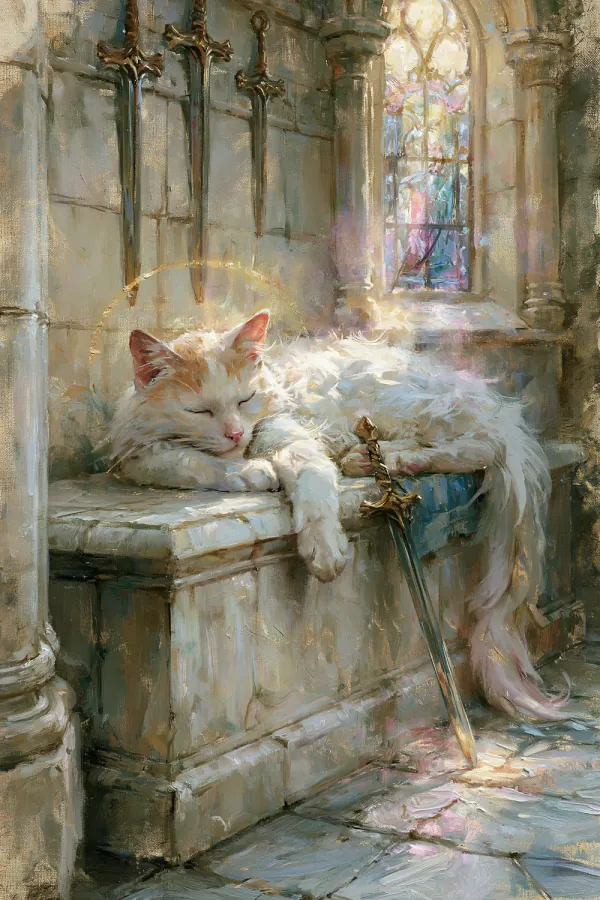
Four of Swords
rest, deliberate withdrawal upright. forced rest, restlessness reversed.
- rest
- recovery
- deliberate withdrawal
- recharging
What this card is
The Four of Swords shows a knight lying in effigy on a tomb, hands folded in prayer, three swords mounted on the wall above him and one lying beneath. He isn't dead, he's resting, deliberately still after conflict rather than in the middle of it. It's the suit's card of a necessary pause, recovery chosen on purpose rather than forced by collapse.
Four of Swords
- rest
- recovery
- deliberate withdrawal
- recharging
- stillness
The Four of Swords means rest and recovery. It shows up after stress, illness, conflict, or burnout, when your mind and body need a real break. Take it on purpose. Clear your schedule, get proper sleep, and step away from the problem for a while. You'll come back stronger and think more clearly. A cat naps between every hunt.
Taking a break in a relationship, or needing some space. Rest and reflect before deciding anything.
Taking time off, or recovering from burnout. Rest before your next move.
Pausing financial decisions while you regroup. Rest first, decide later.
Four of Swords reversed
- forced rest
- resistance to slowing down
- restlessness during recovery
- burnout ignored
- reluctant pause
Reversed, the Four of Swords means resisting rest, or being forced to stop. It looks like pushing through exhaustion, restlessness while you're supposed to be recovering, or getting sick because you didn't slow down. Stop ignoring the signs. Rest now, before your body makes the decision for you.
Refusing to slow down in a relationship. Ask for the space you need.
Burnout you've been ignoring. Book the time off now.
Making financial decisions while exhausted. Wait until you're rested.
Where it lands in a spread
The same card says something different depending on the slot it falls in. This is what Four of Swords means in each position Tsuki and Rue read from.
| Position | Upright | Reversed |
|---|---|---|
| As your card | The Four of Swords is telling you: step back and rest. Trust it's doing real work. | The Four of Swords reversed is asking you whether you're truly resting, or still racing mentally. |
| Situation | Take the deliberate rest. Step back and recover before the next round. | Notice when rest has been forced rather than chosen. |
| Action | Do genuinely nothing for a while. Trust the rest is doing real work. | Ask whether you're truly resting, or just physically stopped while still mentally racing. |
| Outcome | Take the strategic recovery, it leaves you better prepared than pushing through would. | Take the real break now, before forced rest arrives instead. |
| Mind | Give your mind the quiet and stillness it needs. Stop the input. | Stop pushing past the point that's healthy. Slow down. |
| Body | Give your body the genuine rest and recharging it needs right now. | Address the burnout catching up from ignoring the need to slow down. |
| Spirit | Trust the strategic recuperation. Recovery is its own kind of progress. | Settle the restlessness keeping you from actually resting. |
| Choice A / Choice B | Rest first on this path, before any real decision gets made. | Don't let exhaustion force this path instead of a real choice. |
| Deciding Factor | Choose whichever option actually lets you recover before deciding. | Don't let exhaustion make this decision instead of clarity. |
| Embrace | Treat deliberate rest as productive, not a delay. | Take an actual break instead of pushing through exhaustion. |
| Accept | Accept that stepping back right now is doing real work, even if it doesn't feel like progress. | Accept that rest has become necessary, not optional. |
| Let Go | Let go of the pressure to keep pushing without pause. | Release the guilt or habit that's kept you from resting sooner. |